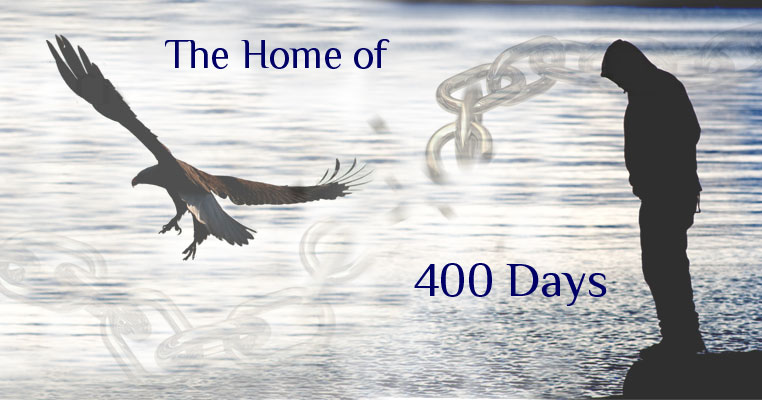
I have now begun my final year and the end is in sight though it seems as if it is as accessible as Saturn viewed through a telescope. Unlike the passing of any other type of anniversary, the passing of this one certainly does make me feel different. Since I awoke on January 23rd, I feel a growing sense of anticipation, anxiety, and urgency with each passing day.
There is so much I have to do in preparation for the parole-related interviews and for my release. I must plan as if I will be paroled, no matter how unlikely the probability of my actual release.
Preparing for the interviews I the easy part for me, I have to be ready with an answer for any questions they may ask and I must be confident when giving the answers. That much comes to me naturally; it is the other stuff the interviewers want to see that is a bit difficult.
I need to show everyone that I have a short-term plan for my transition back into society. I want to have it written out in a professional manner for the purpose of appearance. The problem is that I have never lived life as an adult outside of prison so I am trying to plan for something in which I have no experience.
My confidence dies here. I don’t know how to live a normal life.
I also want to have a long-term plan to present to the Parole Board, detailing where I want to be in life five, ten, and twenty years after my release. This is much easier than the short-term plan. Of course, my long-term plan will be an honest representation of my goals, but even I know that the dynamics of life make long-term planning more fluid than short-term planning. My goals will change, at least a little but, to fit the circumstances that life presents.
The Parole Board requires that I submit a home plan, a definite address to which I will be released. My options are very limited here. Due to difficulties in the relationship that I have with my immediate family, the only options I have are a cousin and his mother. If they can’t or won’t let me use them for my home plan, I must find a halfway house or other transitional housing that will accept me.
The Parole Board also requires that I provide a written version of the offenses I am convicted of, but it is not that straightforward. They are looking for signs that you are trying to justify your actions, signs of remorse, and signs of rehabilitation. A copy of the police report doesn’t cut it, nor does a casual, nonchalant explanation of events. I am not looking forward to having to re-live the emotions I felt that day of my crime as I detail it in writing.
Finally there are a lot of things I must do for my own personal preparation. I must study the driver’s manual so that I can get my driver’s license as soon as possible after my release. I must review everything that I have learned about personal financial planning so that I do not end up in a dire position because I did not manage my finances properly. I must research technical schools, colleges, and financial aid options so that I can continue the education I need to make my career goals achievable. I must get a handle on the real cost of living in the area to which I will be released so that I am not blindsided by it. These things and others related to living outside of prison may seem small but they are important.
My plate is full. In the back of my mind there is a fear that I may not be able to handle all of it. There is also a fear that I may sabotage it out of my anxiety over the coming transition. The best way I can describe what I will be facing is to compare it to a phenomenon in the animal kingdom; I am being born into the world and abandoned to learn how to survive on my own.
Wish me luck.
Wednesday, April 7, 2010

Thursday, March 18, 2010
Stripped Bare By Beauty
For those who know me personally, it is no secret that I am a pretty dour individual, prone to bad moods, cynicism, and overall melancholy. Given my experiences in my nearly thirty years of life, over half of which I have spent incarcerated, I believe this is acceptable; the sun doesn’t shine at night.
Over the years, I have learned to find inspiration in the darkness that dominates my life and the negativity of the world in which I live. My writing and music reflect this, being filled with subject matter like drug use, suicide, violence, hate, anger and references to demons, evil, and other things that show a disdain for life. Like Poe, the ugliness in life is often my muse.
These images, however, compose only a small part of my being even though they dominate my exterior world. I do see the beauty in life, though my standard of beauty is hard to meet. Usually I find it only exhibited in the innocence of childhood, the subtleties that express the love of family and friendship, and the rawness of undefiled nature. Rarely do things that are created by man make the grade. When I do see beauty, I am never inspired by it, preferring to simply admire the awesomeness of its power.
Almost nobody has ever seen this in me, even the rare person who has seen me stripped of the many masks I wear. Since I have been incarcerated for most of my life, to witness this is near impossible. With that in mind, I will share with you the most recent event that elicited such a response in me.
I am an avid fan of figure skating and ice dancing and have been since I was a child. I prefer women’s figure skating and pairs dancing over the male side of the sport, but only because the male side is almost comically acrobatic. For me, the sport is about beauty, emotion, and performance, as opposed to structured athleticism.
Two skaters in this year’s Olympic Women’s Figure Skating Championship left me tearfully stunned by their performances during the competition. The first skater, Canadian Bronze Medalist Joannie Rochette, is an emotional story. Two days prior to her short-program performance, her mother died of a massive heart attack. In spite of her heartbreaking loss, she took the ice and gave a miraculous performance, leaving her in a quite unexpected third place. It was her free skate performance, however, that was truly amazing.
Though one of the elite skaters in the world, Ms. Rochette is not considered to be one of the best, especially when compared to the top two ranked performers, who are far and above the rest of the competition. Her free skate did not reflect this. As emotional and well skated as her short program was, her free skate was, by far, the best performance of her life, leaving her only 2.5 points shy of a silver medal. This was overshadowed by the emotion expressed in her performance and the beauty of her spiral sequence. Though technically on point, the way that you could read her love for her mother and see her reflecting on the life they shared together in her eyes, as well as knowing her story and the courage it took to compete left me, and the commentators, speechless. I have never experienced such a thing in my life. It was simply beautifully wonderful.
The second skater, Kim Yun-Na, the gold medalist from the Republic of Korea, also brought me to tears in both her short program and free skate performances. Both were near perfect technically, and the most difficult in element ever attempted, earning her the highest score ever recorded by an amazing 18 points. This fact in itself is awe-inspiring.
The beauty of her performances was unrivaled by anything I have ever seen. The choreography, the lines of Kim Yun-Ya’s body as she performed the elements of the program, the technical precision of the jumps, the grace and flow of her movements, the music she skated to, and her genuine expressions all combined to become the most beautiful man-made creation I have ever witnessed. The individual nature of the performance, the active nature of the sport, and the personal element of the moment made it an experience that can never be repeated or experienced in the same way again. It, too, was wonderfully beautiful.
The story behind Joannie Rochette’s performance and what it aided her in accomplishing was what made her achievement so beautiful and meaningful. Whereas it was the elements themselves and the way they were performed that put the beauty in Kim Yun-Na’s performance. Both amazed me and inspired me enough to write about my experience. Most of all, they allowed me to move a bit further away from the negativity that dominates my exterior and have given me the opportunity to share a part of myself that few realize I possess.
Ugliness may be my muse, but true beauty is my savior.
Over the years, I have learned to find inspiration in the darkness that dominates my life and the negativity of the world in which I live. My writing and music reflect this, being filled with subject matter like drug use, suicide, violence, hate, anger and references to demons, evil, and other things that show a disdain for life. Like Poe, the ugliness in life is often my muse.
These images, however, compose only a small part of my being even though they dominate my exterior world. I do see the beauty in life, though my standard of beauty is hard to meet. Usually I find it only exhibited in the innocence of childhood, the subtleties that express the love of family and friendship, and the rawness of undefiled nature. Rarely do things that are created by man make the grade. When I do see beauty, I am never inspired by it, preferring to simply admire the awesomeness of its power.
Almost nobody has ever seen this in me, even the rare person who has seen me stripped of the many masks I wear. Since I have been incarcerated for most of my life, to witness this is near impossible. With that in mind, I will share with you the most recent event that elicited such a response in me.
I am an avid fan of figure skating and ice dancing and have been since I was a child. I prefer women’s figure skating and pairs dancing over the male side of the sport, but only because the male side is almost comically acrobatic. For me, the sport is about beauty, emotion, and performance, as opposed to structured athleticism.
Two skaters in this year’s Olympic Women’s Figure Skating Championship left me tearfully stunned by their performances during the competition. The first skater, Canadian Bronze Medalist Joannie Rochette, is an emotional story. Two days prior to her short-program performance, her mother died of a massive heart attack. In spite of her heartbreaking loss, she took the ice and gave a miraculous performance, leaving her in a quite unexpected third place. It was her free skate performance, however, that was truly amazing.
Though one of the elite skaters in the world, Ms. Rochette is not considered to be one of the best, especially when compared to the top two ranked performers, who are far and above the rest of the competition. Her free skate did not reflect this. As emotional and well skated as her short program was, her free skate was, by far, the best performance of her life, leaving her only 2.5 points shy of a silver medal. This was overshadowed by the emotion expressed in her performance and the beauty of her spiral sequence. Though technically on point, the way that you could read her love for her mother and see her reflecting on the life they shared together in her eyes, as well as knowing her story and the courage it took to compete left me, and the commentators, speechless. I have never experienced such a thing in my life. It was simply beautifully wonderful.
The second skater, Kim Yun-Na, the gold medalist from the Republic of Korea, also brought me to tears in both her short program and free skate performances. Both were near perfect technically, and the most difficult in element ever attempted, earning her the highest score ever recorded by an amazing 18 points. This fact in itself is awe-inspiring.
The beauty of her performances was unrivaled by anything I have ever seen. The choreography, the lines of Kim Yun-Ya’s body as she performed the elements of the program, the technical precision of the jumps, the grace and flow of her movements, the music she skated to, and her genuine expressions all combined to become the most beautiful man-made creation I have ever witnessed. The individual nature of the performance, the active nature of the sport, and the personal element of the moment made it an experience that can never be repeated or experienced in the same way again. It, too, was wonderfully beautiful.
The story behind Joannie Rochette’s performance and what it aided her in accomplishing was what made her achievement so beautiful and meaningful. Whereas it was the elements themselves and the way they were performed that put the beauty in Kim Yun-Na’s performance. Both amazed me and inspired me enough to write about my experience. Most of all, they allowed me to move a bit further away from the negativity that dominates my exterior and have given me the opportunity to share a part of myself that few realize I possess.
Ugliness may be my muse, but true beauty is my savior.
Thursday, February 25, 2010
The Key to Happiness
There is one question every child in this and many other countries is asked: What do you want to be when you grow up? Many of us are asked this question more than once. I can remember the first time I was asked this question by my kindergarten teacher. My response was immediate, certain, and emphatic: I want to be an astronaut.
My other classmates were just as sure of their fantasies as they replied that they wanted to be doctors, police officers, firemen, actresses, or rock stars. In that time of naïve innocence, all of us think about becoming what we may dream of without any regard to all of the other things that life entails or how hard we must work to make these fantasies come to life. Our equation was simple: We simply wanted and expected to become our fantasy.
As we grew older and gained a more firm grasp on who we thought ourselves to be and experienced more of this thing called life, our fantasy lives changed to things more practical and we began to take steps in the direction needed to make the fantasy real. By fifth grade, I wanted to become a teacher. I liked the idea of being able to share my knowledge and wisdom with others in a way that would help them. Though the desire to be a teacher was more firm than my earlier desire to go to space, my dream of becoming a teacher lacked one important thing. It lacked the knowledge of what life is really about, and anticipation of all the obstacles that would come between me and my dream. Nevertheless I never lost sight of the dream as I entered puberty and then high school.
Then life as I knew it fell apart and I began my cycle of self-destruction.
Unless I am able to find some legal loophole, my attempted homicide conviction has put an end to my dream of becoming a teacher. I still want to teach, and am in fact a teacher in prison. I once held an institutional work assignment tutoring students for their GED, and I recently held a job tutoring the international Computer Driver’s License class here in my facility. Now I unofficially tutor individuals willing to pay for instruction on obtaining their GED, adult basic education, building maintenance, automobile repair, HVAC-R, music theory, guitar playing, and bass guitar playing. Though I enjoy doing it, my dream of teaching is far different from the tutoring I actually do.
Since coming to prison, I have had many different dreams for my life once I am released. Being in prison, there is a lot of time to think about things like that if you care to. I was going to own a large-scale building maintenance company, contracting to do industrial and commercial business. I was going to become a studio musician, able to play all modern rock music instruments. I was going to be a landscape architect, designing real estate subdivisions. I was going to make money in the stock market. I was going to build custom cars and motorcycles. I was going to be a tattoo artist, and I was going to write fantasy novels for a living.
Every dream was career-oriented. There was little room for anything else that one dreams about in life until after I made one of those dreams real. Over the years, I have taken every available step to gain enough knowledge in each area that I have mentioned to make any one of those dreams a realistic possibility, dependent on the opportunities that may present themselves to me at a particular time.
Real life, however, was still an afterthought, and given little weight in my pursuit to eventually live a successful life.
Everybody experiences dreams of success during their early adult lives. For most of these people, securing their dream career is their number one priority. But once the dreamer experiences a little financial independence, life somehow gets in the way and he often falls victim to just going with the flow. Falling in love, having children, the cost of living, and a host of other things quickly push us in different directions and change our dreams and priorities. We realize we may still have success in life, but we find that what makes us successful is not what we originally set out to accomplish.
What makes for a successful life? I have come to realize that the answer to that question is really simple. Life is successful if when you are in your final years you are satisfied with everything you have done to the point that it brings you happiness. If when you die, you die with a smile on your face, you have lead a successful life.
Life is about finding happiness. Amazingly, it was a man who will never have a chance to realize his dreams that revealed it to me. Over the course of four years we had many conversations about life and it was the fact that he was well on his way to happiness before a bad decision ruined it that showed me the importance of what life is about.
Most people in prison never think about their childhood dreams, nor do they ever realize or even care to know about what life is really about. They are true sociopaths, showing concern only for themselves, living in the moment, acting on impulse, seeking instant gratification, and have no concern for anything beyond the NOW. They do not think too far ahead in life and do not care about the consequences of their actions.
Some even consider coming to prison a small price they have to pay for the life they lead outside of prison. They define success in terms of money, fame, or social status. They care only for the things they have in their possession right now, and if something like a child comes into their life, it is considered a burden because it gets in the way of what they really want.
Ironically, it is the people who will never leave the confines of prison that have a true grasp on this reality. Over time they realize what they have thrown away and attempt to find a way to seek happiness in their situation, and to give the life they now have real meaning. They pursue religion, education, charity, and they try to help people like me find the right path. They seek to do anything and everything that may bring them a sense of accomplishment and joy.
Today, I find I can relate to them better than the other inmates, the ones just passing through, and I hold myself apart from the far majority of inmates, because, as obnoxious as this may sound, I do consider myself to be different from and better than them.
Once again, my dreams have changed. I am no longer so focused on the career aspect of my life. I do think about it and have an idea of what I would like to spend my life doing in order to support myself, but it no longer holds too much importance in the grand scheme of things. I no longer care about how much money I make, as long as it is enough to get by without a struggle. I don’t think about finding or building a dream home or fancy car. I do have a strong desire to help troubled teens, as I once was, before they end up in same situation that I have, fighting to find a way to live my dreams.
All of that, however, is secondary to me. If I can make any or all of that happen in my life it will be a bonus. My ultimate happiness will be found in being a loving husband and father, devoted to making the dreams of my wife and children come true. I want to be able to provide for the needs of my family and experience the love and the wonder, the good and the bad, the easy and the hard, all of the aspects of family life.
No candle can shine next to that. If I can make that dream a reality, I will die a happy man.
The next time someone asks me what I want to be in life my response will be as immediate, as certain, and said with more emphasis and enthusiasm than it was when I was in kindergarten: I want to be a family man, nothing more, and nothing less.
My other classmates were just as sure of their fantasies as they replied that they wanted to be doctors, police officers, firemen, actresses, or rock stars. In that time of naïve innocence, all of us think about becoming what we may dream of without any regard to all of the other things that life entails or how hard we must work to make these fantasies come to life. Our equation was simple: We simply wanted and expected to become our fantasy.
As we grew older and gained a more firm grasp on who we thought ourselves to be and experienced more of this thing called life, our fantasy lives changed to things more practical and we began to take steps in the direction needed to make the fantasy real. By fifth grade, I wanted to become a teacher. I liked the idea of being able to share my knowledge and wisdom with others in a way that would help them. Though the desire to be a teacher was more firm than my earlier desire to go to space, my dream of becoming a teacher lacked one important thing. It lacked the knowledge of what life is really about, and anticipation of all the obstacles that would come between me and my dream. Nevertheless I never lost sight of the dream as I entered puberty and then high school.
Then life as I knew it fell apart and I began my cycle of self-destruction.
Unless I am able to find some legal loophole, my attempted homicide conviction has put an end to my dream of becoming a teacher. I still want to teach, and am in fact a teacher in prison. I once held an institutional work assignment tutoring students for their GED, and I recently held a job tutoring the international Computer Driver’s License class here in my facility. Now I unofficially tutor individuals willing to pay for instruction on obtaining their GED, adult basic education, building maintenance, automobile repair, HVAC-R, music theory, guitar playing, and bass guitar playing. Though I enjoy doing it, my dream of teaching is far different from the tutoring I actually do.
Since coming to prison, I have had many different dreams for my life once I am released. Being in prison, there is a lot of time to think about things like that if you care to. I was going to own a large-scale building maintenance company, contracting to do industrial and commercial business. I was going to become a studio musician, able to play all modern rock music instruments. I was going to be a landscape architect, designing real estate subdivisions. I was going to make money in the stock market. I was going to build custom cars and motorcycles. I was going to be a tattoo artist, and I was going to write fantasy novels for a living.
Every dream was career-oriented. There was little room for anything else that one dreams about in life until after I made one of those dreams real. Over the years, I have taken every available step to gain enough knowledge in each area that I have mentioned to make any one of those dreams a realistic possibility, dependent on the opportunities that may present themselves to me at a particular time.
Real life, however, was still an afterthought, and given little weight in my pursuit to eventually live a successful life.
Everybody experiences dreams of success during their early adult lives. For most of these people, securing their dream career is their number one priority. But once the dreamer experiences a little financial independence, life somehow gets in the way and he often falls victim to just going with the flow. Falling in love, having children, the cost of living, and a host of other things quickly push us in different directions and change our dreams and priorities. We realize we may still have success in life, but we find that what makes us successful is not what we originally set out to accomplish.
What makes for a successful life? I have come to realize that the answer to that question is really simple. Life is successful if when you are in your final years you are satisfied with everything you have done to the point that it brings you happiness. If when you die, you die with a smile on your face, you have lead a successful life.
Life is about finding happiness. Amazingly, it was a man who will never have a chance to realize his dreams that revealed it to me. Over the course of four years we had many conversations about life and it was the fact that he was well on his way to happiness before a bad decision ruined it that showed me the importance of what life is about.
Most people in prison never think about their childhood dreams, nor do they ever realize or even care to know about what life is really about. They are true sociopaths, showing concern only for themselves, living in the moment, acting on impulse, seeking instant gratification, and have no concern for anything beyond the NOW. They do not think too far ahead in life and do not care about the consequences of their actions.
Some even consider coming to prison a small price they have to pay for the life they lead outside of prison. They define success in terms of money, fame, or social status. They care only for the things they have in their possession right now, and if something like a child comes into their life, it is considered a burden because it gets in the way of what they really want.
Ironically, it is the people who will never leave the confines of prison that have a true grasp on this reality. Over time they realize what they have thrown away and attempt to find a way to seek happiness in their situation, and to give the life they now have real meaning. They pursue religion, education, charity, and they try to help people like me find the right path. They seek to do anything and everything that may bring them a sense of accomplishment and joy.
Today, I find I can relate to them better than the other inmates, the ones just passing through, and I hold myself apart from the far majority of inmates, because, as obnoxious as this may sound, I do consider myself to be different from and better than them.
Once again, my dreams have changed. I am no longer so focused on the career aspect of my life. I do think about it and have an idea of what I would like to spend my life doing in order to support myself, but it no longer holds too much importance in the grand scheme of things. I no longer care about how much money I make, as long as it is enough to get by without a struggle. I don’t think about finding or building a dream home or fancy car. I do have a strong desire to help troubled teens, as I once was, before they end up in same situation that I have, fighting to find a way to live my dreams.
All of that, however, is secondary to me. If I can make any or all of that happen in my life it will be a bonus. My ultimate happiness will be found in being a loving husband and father, devoted to making the dreams of my wife and children come true. I want to be able to provide for the needs of my family and experience the love and the wonder, the good and the bad, the easy and the hard, all of the aspects of family life.
No candle can shine next to that. If I can make that dream a reality, I will die a happy man.
The next time someone asks me what I want to be in life my response will be as immediate, as certain, and said with more emphasis and enthusiasm than it was when I was in kindergarten: I want to be a family man, nothing more, and nothing less.
Friday, February 5, 2010
The Masks We Wear
All of us wear masks disguising our true selves from time to time. We don these masks to protect our vulnerabilities from being exposed and to control how we are perceived by others. What mask we wear depends on when we must don it and who we must don it for.
A normal adult will wear three different masks throughout the day: a mask covering his vulnerabilities when his family is depending on him; a mask hiding character flaws and personal demons when around the general public; and a mask controlling the perception of his friends and co-workers. Sometimes a person will don a mask meant to fool himself during times of personal turmoil, fear, and uncertainty. In most cases, there is a firm border separating when each mask is to be donned.
In society, these masks do not define who a person really is—they simply emphasize and exaggerate various parts of his personal character while minimizing or hiding others. This is and example of the cliché “You can’t judge a book by its cover.” In all but the closest of personal relationships, however, the “cover’ is all that is available for this judging; for to expose what lies beneath puts a person at a disadvantage to others by allowing vulnerabilities to be witnessed. In a relationship with a large amount of comfort and trust, these masks come off and true character can be shown freely without consequence. The strength of a relationship and the definition of a person’s character depends on this.
In prison the masks never come off and the border that separates these masks is not well-defined. Vulnerability and weakness can never be exposed because there is always someone waiting to prey on it. We hurt, yet cannot cry. We fear, yet cannot run. We smile, yet are not happy. We feel sad and weak, yet stand firm against it, feigning acceptance and strength. We feel hopeless and empty, yet march forward ever searching for that light at the end of the tunnel. We hear the words of comfort from our friends and family and thank them for “being there” for us, yet we still feel alone. We feel guilt for the things we must do to preserve our minds and bodies, yet we can show no remorse or regret.
We hide our pain from our friends and families and each other. We disguise our vulnerability and weakness with hardened, desensitized emotions, anger, and arrogance. We play “model inmate” for the prison staff and “Mr. Badass” for the other inmates. We bury our hopes, fears, and dreams, and replace it with numbness.
These are the masks we wear in prison. These are the masks that never come off.
Never being able to shed these masks is not without consequence. The mask worn most often tends to dominate, and incorporate the others into one convoluted, complex, tumultuous, interwoven and conflicted personality; no more lines, no more borders, no more definition, just chaos and confusion.
We even have a mask to hide that from everyone, including ourselves.
Given enough time in the prison environment, this giant mixed-up mask being worn constantly tends to supplant who we really are. First it blurs the line between who we really are and who we have to be to survive. Eventually, no matter how hard we struggle against it, we lose ourselves to the confusion. The mask dominates and defines us; we literally become what the mask represented. Once lost, it is all but impossible to find ourselves again in this environment.
When I first came to prison at age 17, I put on a mask out of the necessity for survival. I adopted the role of a tough, emotionless, somewhat crazed, violent criminal. I made other inmates see me as a person to be feared and respected, someone who did not care about the consequences of his actions, someone you did not make angry. They also witnessed an intelligence exceeding that of most criminals; one that was cunning and devious. I wore an air of confidence, sometimes downright arrogance, that bordered on egomania.
I also donned a mask meant to deceive those who have direct control over my life; correctional officers, counselors, unit managers, prison administration. They see a hard-working, polite, calm, intelligent, and respected young man who has been completely reformed, deserving a second chance at life.
For my family and friends, they did see some of the truth. I was growing and trying to become a better person even though I could not show it to anyone else. Even so, I hid from them the reality of my life in prison and the things I had to do in that life. They’ve seen me smiling in the visiting room and heard a brightness and situational acceptance in the tone of my letters even though I felt hollow, depressed, and angry about my situation.
I am now facing the consequences of never shedding those masks. They have blended into one and, at some point, I have lost myself. I have let myself become a hardened convict. Until quite recently, I felt no fear, shed no tears, felt no love, felt no real emotion. I was righteous in my anger and my justice. There was no vulnerability in my defenses or weakness in my armor. I could play hardened convict and model inmate at the same time, then flip a switch and become that happy, caring person my friends knew me as. The penitentiary had defined me as a person. I didn’t even realize it.
Over the last two and a half years, as I get closer and closer to my minimum, things are changing. My friend Laura has been busy chipping away at my armor, and that has allowed me to dream again about what I want for my life. When she visits, she takes pieces of my mask off, and I am able to feel again. The smiles she brings out are of genuine happiness. When she leaves, though, the mask would go back on--cracked, but whole.
The recent crisis between my oldest friends completely shattered the mask that Laura had cracked. There were tears, pain, fear, and love, all of the emotions I haven’t felt in a very long time. There was also a realization of how lost I had become and how much pride I took in being that penitentiary-bred avatar.
It disgusted me.
Becoming aware that there was no longer a separation between who I am and the mask I wear was the first step in finding the answers to the questions I need to ask and answer to find the way back to myself. It is the beginning of the unification of who I am with who I want to be.
Though the original mask has been shattered, I must still wear a mask to protect myself as I cannot escape my environment. However with the help of my friends, it will not define my character and I will never become so dissociated from reality again.
With my friends to guide me, I will ultimately figure out who I want to be and no longer walk blind in the search for definition.
I am on my way.
A normal adult will wear three different masks throughout the day: a mask covering his vulnerabilities when his family is depending on him; a mask hiding character flaws and personal demons when around the general public; and a mask controlling the perception of his friends and co-workers. Sometimes a person will don a mask meant to fool himself during times of personal turmoil, fear, and uncertainty. In most cases, there is a firm border separating when each mask is to be donned.
In society, these masks do not define who a person really is—they simply emphasize and exaggerate various parts of his personal character while minimizing or hiding others. This is and example of the cliché “You can’t judge a book by its cover.” In all but the closest of personal relationships, however, the “cover’ is all that is available for this judging; for to expose what lies beneath puts a person at a disadvantage to others by allowing vulnerabilities to be witnessed. In a relationship with a large amount of comfort and trust, these masks come off and true character can be shown freely without consequence. The strength of a relationship and the definition of a person’s character depends on this.
In prison the masks never come off and the border that separates these masks is not well-defined. Vulnerability and weakness can never be exposed because there is always someone waiting to prey on it. We hurt, yet cannot cry. We fear, yet cannot run. We smile, yet are not happy. We feel sad and weak, yet stand firm against it, feigning acceptance and strength. We feel hopeless and empty, yet march forward ever searching for that light at the end of the tunnel. We hear the words of comfort from our friends and family and thank them for “being there” for us, yet we still feel alone. We feel guilt for the things we must do to preserve our minds and bodies, yet we can show no remorse or regret.
We hide our pain from our friends and families and each other. We disguise our vulnerability and weakness with hardened, desensitized emotions, anger, and arrogance. We play “model inmate” for the prison staff and “Mr. Badass” for the other inmates. We bury our hopes, fears, and dreams, and replace it with numbness.
These are the masks we wear in prison. These are the masks that never come off.
Never being able to shed these masks is not without consequence. The mask worn most often tends to dominate, and incorporate the others into one convoluted, complex, tumultuous, interwoven and conflicted personality; no more lines, no more borders, no more definition, just chaos and confusion.
We even have a mask to hide that from everyone, including ourselves.
Given enough time in the prison environment, this giant mixed-up mask being worn constantly tends to supplant who we really are. First it blurs the line between who we really are and who we have to be to survive. Eventually, no matter how hard we struggle against it, we lose ourselves to the confusion. The mask dominates and defines us; we literally become what the mask represented. Once lost, it is all but impossible to find ourselves again in this environment.
When I first came to prison at age 17, I put on a mask out of the necessity for survival. I adopted the role of a tough, emotionless, somewhat crazed, violent criminal. I made other inmates see me as a person to be feared and respected, someone who did not care about the consequences of his actions, someone you did not make angry. They also witnessed an intelligence exceeding that of most criminals; one that was cunning and devious. I wore an air of confidence, sometimes downright arrogance, that bordered on egomania.
I also donned a mask meant to deceive those who have direct control over my life; correctional officers, counselors, unit managers, prison administration. They see a hard-working, polite, calm, intelligent, and respected young man who has been completely reformed, deserving a second chance at life.
For my family and friends, they did see some of the truth. I was growing and trying to become a better person even though I could not show it to anyone else. Even so, I hid from them the reality of my life in prison and the things I had to do in that life. They’ve seen me smiling in the visiting room and heard a brightness and situational acceptance in the tone of my letters even though I felt hollow, depressed, and angry about my situation.
I am now facing the consequences of never shedding those masks. They have blended into one and, at some point, I have lost myself. I have let myself become a hardened convict. Until quite recently, I felt no fear, shed no tears, felt no love, felt no real emotion. I was righteous in my anger and my justice. There was no vulnerability in my defenses or weakness in my armor. I could play hardened convict and model inmate at the same time, then flip a switch and become that happy, caring person my friends knew me as. The penitentiary had defined me as a person. I didn’t even realize it.
Over the last two and a half years, as I get closer and closer to my minimum, things are changing. My friend Laura has been busy chipping away at my armor, and that has allowed me to dream again about what I want for my life. When she visits, she takes pieces of my mask off, and I am able to feel again. The smiles she brings out are of genuine happiness. When she leaves, though, the mask would go back on--cracked, but whole.
The recent crisis between my oldest friends completely shattered the mask that Laura had cracked. There were tears, pain, fear, and love, all of the emotions I haven’t felt in a very long time. There was also a realization of how lost I had become and how much pride I took in being that penitentiary-bred avatar.
It disgusted me.
Becoming aware that there was no longer a separation between who I am and the mask I wear was the first step in finding the answers to the questions I need to ask and answer to find the way back to myself. It is the beginning of the unification of who I am with who I want to be.
Though the original mask has been shattered, I must still wear a mask to protect myself as I cannot escape my environment. However with the help of my friends, it will not define my character and I will never become so dissociated from reality again.
With my friends to guide me, I will ultimately figure out who I want to be and no longer walk blind in the search for definition.
I am on my way.
Monday, January 18, 2010
Who Am I Really?
Who am I really? Who do I really want to be? I was recently propelled into crisis mode by a situation involving the only two people in my life who have known me since before I came to prison. Both were long time friends with each other and I love both of them dearly. A man broke that precious bond of friendship between these two women, and I was forced to choose which one to support based only on what I was being told by each of them. My reaction to the cause of this situation, what was being said, and the direction in which it was headed as well as the pain it caused me demands that I answer these two questions or face dire consequences.
In 1998 as a troubled teenager with a not-so-good family life, I earned a spot in one of the state's most violent penitentiaries, populated by nearly 4,000 of the worst men the world has to offer; the worst of the worst. Being small, white, and so young in such a place is not easy; you are prey and must figure out how to survive. You must choose between forfeiting your integrity and manhood for protection, or fighting for your life—alone. I chose to fight.
In my particular circumstance, self-preservation meant I had to become more ruthless, more violent than those around me. I had to be willing and able to hurt, and maybe kill, with no hesitation or compunction. Initially, it was about survival. The things I was forced to do to survive in the twisted world of prison earned me a measure of respect and fear. With that fear and respect came a semblance of power and control over those around me. My intelligence and natural ability to lead allowed me to quickly work my way up the ranks to the top tier of the complex political structure of the prison system.
To be a respected leader in prison society, you must follow the unwritten “Convict Code.” This code is a somewhat skewed code of ethics and morals that requires a convict to maintain a certain level of integrity by his behavior, actions, and responses to the actions of those he must live with. This at times requires me to impose penalties and retribution on those in violation of the code. Over the past twelve years I have been responsible for many things that would be considered inexcusable outside of prison society. The convict code has become ingrained in my person and has become a natural part of my thought process. It is almost instinctual for me to act according to this code…
I did not realize this until I became involved in the situation between my two best friends. I have long since left the penitentiary for three other prisons, each many degrees less violent and chaotic than the last, in an attempt to escape being a “convict” and try to become a better person; one who would be able to live a respectable life outside of prison. I thought that I was doing quite well avoiding situations that would draw a convict response, thinking that when I was no longer forced to live with people I could not stand, I would be fine.
In certain situations, I still have the desire to react a certain way, and that is understandable. Everybody experiences the desire to want to hurt someone in anger sometimes. I feel an immense amount of guilt for all that I have done, and realize that it is a step in the right direction. I am in the process of learning how to handle all of the guilt even though I have yet to forgive myself for a number of things I have done that went beyond survival and were done out of sheer hate and anger.
My first reaction to the situation I was placed in by my dearest friends was one of extreme anger. The pain that it inflicted on the three of us was like a personal attack and, in the world in which I live, a personal attack requires retribution. My first “want” was to eliminate the person who caused the problem. That desire was so strong it was enjoyable just thinking about it. The only reason I was able to restrain myself was due to the respect and love I have for my friends and the knowledge of the pain it would inflict on them.
Because of that, I was afforded time to think, and I discovered I had not really become a better person. I was just avoiding the situations that brought the convict out in me. The convict was in my marrow.
I do not want to be a convict anymore. I do not want to be some vicious, violent criminal. Yet it is a part of who I am because I have lived among them, and lived like them, for so long. Coupled with the tremendous guilt and the revelation of it all, I face an almost unbearable inner conflict on a daily basis.
So who am I, really? Who do I really want to be? Being forced to choose which friend to stand by also meant I would lose the other one. I had to make the right choice and also decide how to deal with the pain and anger doing so brought out in me. I chose to support one because I believe the most wrong was done to her by both her husband and her former best friend. I changed my focus from the problem and the cause of it to minimizing the effects his leaving them has on the life of my friend and her children.
Though the situation is fluid and things continue to happen to fuel my anger, I no longer have any desire to hurt the man who is the cause of it all. My concern has become the well-being of my friend and her children and the assurance that they are able to have the best life possible in their time of suffering and need.
I believe I have found a direction away from the monster I have lived as for all of these years. Though I am unable to answer the question of who I really am, I believe I am now on the way to figuring out who it is I want to be. If I want to have a chance a life beyond the penitentiary, I must figure out the answer to both questions, and work on merging them into the same answer.
That is my goal, and I have only 400 days in which to accomplish it.
In 1998 as a troubled teenager with a not-so-good family life, I earned a spot in one of the state's most violent penitentiaries, populated by nearly 4,000 of the worst men the world has to offer; the worst of the worst. Being small, white, and so young in such a place is not easy; you are prey and must figure out how to survive. You must choose between forfeiting your integrity and manhood for protection, or fighting for your life—alone. I chose to fight.
In my particular circumstance, self-preservation meant I had to become more ruthless, more violent than those around me. I had to be willing and able to hurt, and maybe kill, with no hesitation or compunction. Initially, it was about survival. The things I was forced to do to survive in the twisted world of prison earned me a measure of respect and fear. With that fear and respect came a semblance of power and control over those around me. My intelligence and natural ability to lead allowed me to quickly work my way up the ranks to the top tier of the complex political structure of the prison system.
To be a respected leader in prison society, you must follow the unwritten “Convict Code.” This code is a somewhat skewed code of ethics and morals that requires a convict to maintain a certain level of integrity by his behavior, actions, and responses to the actions of those he must live with. This at times requires me to impose penalties and retribution on those in violation of the code. Over the past twelve years I have been responsible for many things that would be considered inexcusable outside of prison society. The convict code has become ingrained in my person and has become a natural part of my thought process. It is almost instinctual for me to act according to this code…
I did not realize this until I became involved in the situation between my two best friends. I have long since left the penitentiary for three other prisons, each many degrees less violent and chaotic than the last, in an attempt to escape being a “convict” and try to become a better person; one who would be able to live a respectable life outside of prison. I thought that I was doing quite well avoiding situations that would draw a convict response, thinking that when I was no longer forced to live with people I could not stand, I would be fine.
In certain situations, I still have the desire to react a certain way, and that is understandable. Everybody experiences the desire to want to hurt someone in anger sometimes. I feel an immense amount of guilt for all that I have done, and realize that it is a step in the right direction. I am in the process of learning how to handle all of the guilt even though I have yet to forgive myself for a number of things I have done that went beyond survival and were done out of sheer hate and anger.
My first reaction to the situation I was placed in by my dearest friends was one of extreme anger. The pain that it inflicted on the three of us was like a personal attack and, in the world in which I live, a personal attack requires retribution. My first “want” was to eliminate the person who caused the problem. That desire was so strong it was enjoyable just thinking about it. The only reason I was able to restrain myself was due to the respect and love I have for my friends and the knowledge of the pain it would inflict on them.
Because of that, I was afforded time to think, and I discovered I had not really become a better person. I was just avoiding the situations that brought the convict out in me. The convict was in my marrow.
I do not want to be a convict anymore. I do not want to be some vicious, violent criminal. Yet it is a part of who I am because I have lived among them, and lived like them, for so long. Coupled with the tremendous guilt and the revelation of it all, I face an almost unbearable inner conflict on a daily basis.
So who am I, really? Who do I really want to be? Being forced to choose which friend to stand by also meant I would lose the other one. I had to make the right choice and also decide how to deal with the pain and anger doing so brought out in me. I chose to support one because I believe the most wrong was done to her by both her husband and her former best friend. I changed my focus from the problem and the cause of it to minimizing the effects his leaving them has on the life of my friend and her children.
Though the situation is fluid and things continue to happen to fuel my anger, I no longer have any desire to hurt the man who is the cause of it all. My concern has become the well-being of my friend and her children and the assurance that they are able to have the best life possible in their time of suffering and need.
I believe I have found a direction away from the monster I have lived as for all of these years. Though I am unable to answer the question of who I really am, I believe I am now on the way to figuring out who it is I want to be. If I want to have a chance a life beyond the penitentiary, I must figure out the answer to both questions, and work on merging them into the same answer.
That is my goal, and I have only 400 days in which to accomplish it.
Subscribe to:
Posts (Atom)

 Posts
Posts

